#22 Bubblegum Splash! – Plastic Smile (1987)

https://www.youtube.com/watch?v=SFzugJg-sEc

Bubblegum Splash! were a short-lived indie band from Salisbury, England. The band featured Jim Harrison, Alan Harrison, Dave Todd, Marty Cummins, and Nikki Barr. The group disbanded in 1988. They recorded for indie label, the Subway Organisation, and their only release, (apart from an appearance on a split flexi-disc with the Darling Buds), was the 1987 EP “Splashdown”. Plastic Smile is taken from this EP.

The record showcases the typical sound, image and approach of the so-called post-post-punk “twee”, “shambling” “anorak” or “C86” movement, which churned out short, sweet and almost childlike pop melodies usually sung by girls, set against knowingly sloppy, fuzzed-out and feedback-seasoned guitars, and primitive drumming and tambourines. The sound had its roots in the Ramones’ minimalist three-chord structures, 60s girl group meldoies and harmonies, the buzzy punk-pop of the Buzzcocks, the DIY post-punk pop of Glasgow’s Postcard scene bands, (like Orange Juice), the Jesus and Mary Chain’s feedback-drenched melodies, and the melodic but raw sounds of early 80s bands like the Pastels and Television Personalities. The Scottishness of some of the key influences, (Postcard, Orange Juice, the Jesus and Mary Chain, the Pastels), perhaps explains why a plethora of these bands came from Scotland – e.g. the Shop Assistants, Jesse Garon and the Desperados, the Clouds, the Soup Dragons, the Fizzbombs, Baby Lemonade, the Bachelor Pad, Rote Kapelle, to name but a few. Supported by a virtual industry of DIY pop fanzines and free flexi-discs, both the bands and fans tended towards a certain look – 60s-style bowl-cuts, anoraks or leather jackets (not the punk or biker kind), stripey t-shirts (essential), tight black trousers and winkle-pickers. This scene, which only really lasted a couple of years, and ran out of steam by around 1989, (being the key influence on the so-called “Shoe-gazing” scene of the early 90s), is catalogued in Sam Knee’s A Scene in Between book. I was very much part of it, back in the day, (complete with bowl-cut, etc, etc.), and had a great time following all these bands around with my goth girlfriend, (who moderated her black lacquered look at these gigs).

But what always annoys me is that there is no settled name for this musical movement, (a fact perhaps demonstrated by the prosaic title of Sam Knee’s book), and the various names that we do have are either pejorative or inaccurate. “Twee” and ”anorak”, make it sound like the scene was a long children’s birthday party, and ”shambling”, (a John Peel-coined description, celebrating the deliberately sloppy nature of the music), suggests the music was crap, which it certainly wasn’t. “C86” is a lazy and inaccurate title, given on the back of the C86 cassette compilation released by the British music magazine NME, featuring new bands licensed from British independent record labels of the time.  (The tape was a belated follow-up to C81, a collection of new bands’ songs released by the NME in 1981 in conjunction with Rough Trade). It is stupid, however, to apply this name to the scene described in this blog post, because the C86 tape had a track list made up of various bands with very different sounds and influences, and cannot be shoe-horned into one scene. Anyway, if anything, bands like Bubblegum Splash! belonged to the class of 1987. So, we need a name for this “Scene in Between”. Any suggestions?
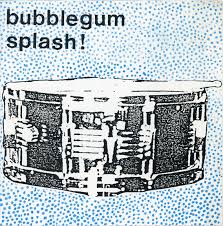
bubblegum

#21 Can – Paperhouse (1971)

https://www.youtube.com/watch?v=Nzry1jz2-oA

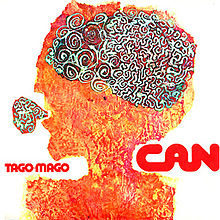
I’m posting this as a tribute to Holger Czukay, co-founder and bassist of Can, whose death at the age of 79 was announced today. Can were in the vanguard of a 1970s musical movement in Germany, rather pejoratively dubbed “Krautrock” by the Western musical press, (why have we never come up with a better name than this?), which melded atonal and repetitive rock rhythms with psychedelic, jazz and electronic compositions. Alongside bands including Amon Duul, Ash Ra Temple, Neu!, Faust and Tangerine Dream, Can ushered in a new and exciting period for German, and indeed world, music in the 70s. After a period of study under avant garde composer Karlheinz Stockhausen in the early 1960s, Czukay played on nine of Can’s albums, including their highly-rated Tago Mago and Ege Bamyasi albums, before leaving the band in 1977 to go solo. This track, Paperhouse, is from the 1971 Tago Mago album, and showcases krautrock’s musical style perfectly. RIP.

Tago_Mago

#20 Del – Motorbike Annie (1973)

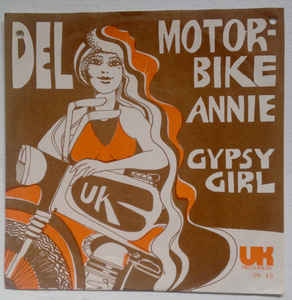
Motorbike Annie is a one-off single released in 1973 on UK Records under the moniker “Del”, by Derek Parrott, (although he released a few other records under his full name). There must have been something in the water around that time, because the UK in the early 70s seemed to produce a plethora of one-off, obscure, folk-tinged, beautifully-crafted pop singles like this, including by artists such as Hobbit, A & A North, Dog Rose, and Knocker Jungle, (amongst many others). All worth checking out. Motorbike Annie is a lovely acoustic guitar-led melody, nostalgic and winsome in tone, with understated mellotron, and obligatory 1970s motorbike sounds, before building up to a heavy psych-type finish. It’s exactly the sort of record that this blog intends to highlight – obscure and wonderful. It was compiled on the Bubblepop – 20 UK Pop Oddities CD compilation (RPM Records) from 2005, and also came out on a retrospective CD of Derek Parrott’s early releases Flashback – The Seventies Singles. Both these CD releases are almost as hard to get a hold of as the original Motorbike Annie single, which seems to be the only way to access the song on vinyl. (I got my copy from Discogs, for a not inconsiderable sum).

From North London, Parrott began his musical career as a folk musician in mid-60s London, where he rubbed shoulders with the likes of Donovan. It was Donovan in fact who suggested Parrott travel to Morocco, in order to “find himself” as a poet and musician. He duly did this at the start of the 70s, and honed his musical and song-writing abilities on the busker circuit there. On returning to the UK, it wasn’t too long before he managed, through a producer he was friendly with, to record Motorbike Annie. The song, despite some plays on the BBC, was not a hit. Nevertheless, Parrott had got the recording bug, and in 1977 he got the chance to record an album, as “Derek Parrott”, with quality session musicians, and a few soon-to-be-famous musicians, including Huey Lewis of The News (on harmonica), and Tony Robinson of reggae band, Aswad. It was even mastered at Abbey Road studios.

However, two weeks before the resulting album, Open Up, was due to be released, the record company changed their distributors, and the album was shelved. Worse was to follow, when it was found that the record company had lost the masters. Nevertheless, Derek had always had the A side on acetate, and discovered a friend had an original tape of the B side. The album eventually came out in 1999 (just 22 years late…) on his own “Parrotttracks” label. The cover artwork cleverly mimics the original intended cover for the album, with an older, 1999 Parrott in the same pose as the 1977 Parrott.

He became disillusioned by his Open Up experience, and dropped out of the recording business for some time, (starting a lawn care business amongst other ventures). Eventually, he began recording new material again in the 1990s, and released two albums, which though they were not successful, were undoubtedly of quality. He died in 2011, aged 63. His was a tale of “what might have been”, and like so many quality musicians who never “made it”, they were dogged by sheer bad luck.

del

#19 Svensk – Dream Magazine (1967)

https://www.youtube.com/watch?v=2syCN_Q_q6A

Roger Hopkins and Jason Paul of Svensk, (very glamorously compared to most bands), met through Roger’s career as a fashion photographer and Jason’s role as an in-demand model. (I kid you not). Hopkins was also a music journalist, and became acquainted with many of the 1960s rock stars, which provided him with very useful musical and management contacts, and plenty of encouragement.  Formed in Bournemouth in 1967, as part of the town’s burgeoning underground music scene, Svensk, (meaning “Swedish” in Swedish. Erm…) wrote a clutch of songs, but got their big break when they played this song, Dream Magazine, to Hopkins’ long time friend, the legendary Roy Orbison, (I told you he had good contacts), who lined them up with record boss and Troggs creator, Larry Page, at Page One Records. He signed them immediately. The song was recorded within days. One other song followed in the same year with Page One, (You / All I have to Do is Dream), before they seemed to have called it a day. The song is a psychedelic cult classic, in the vein of The Troggs or early Pink Floyd.

svensk


Blog at WordPress.com.

Up ↑